Accelerating Value Flow at Volkswagen Group Aftersales Using Team Topologies
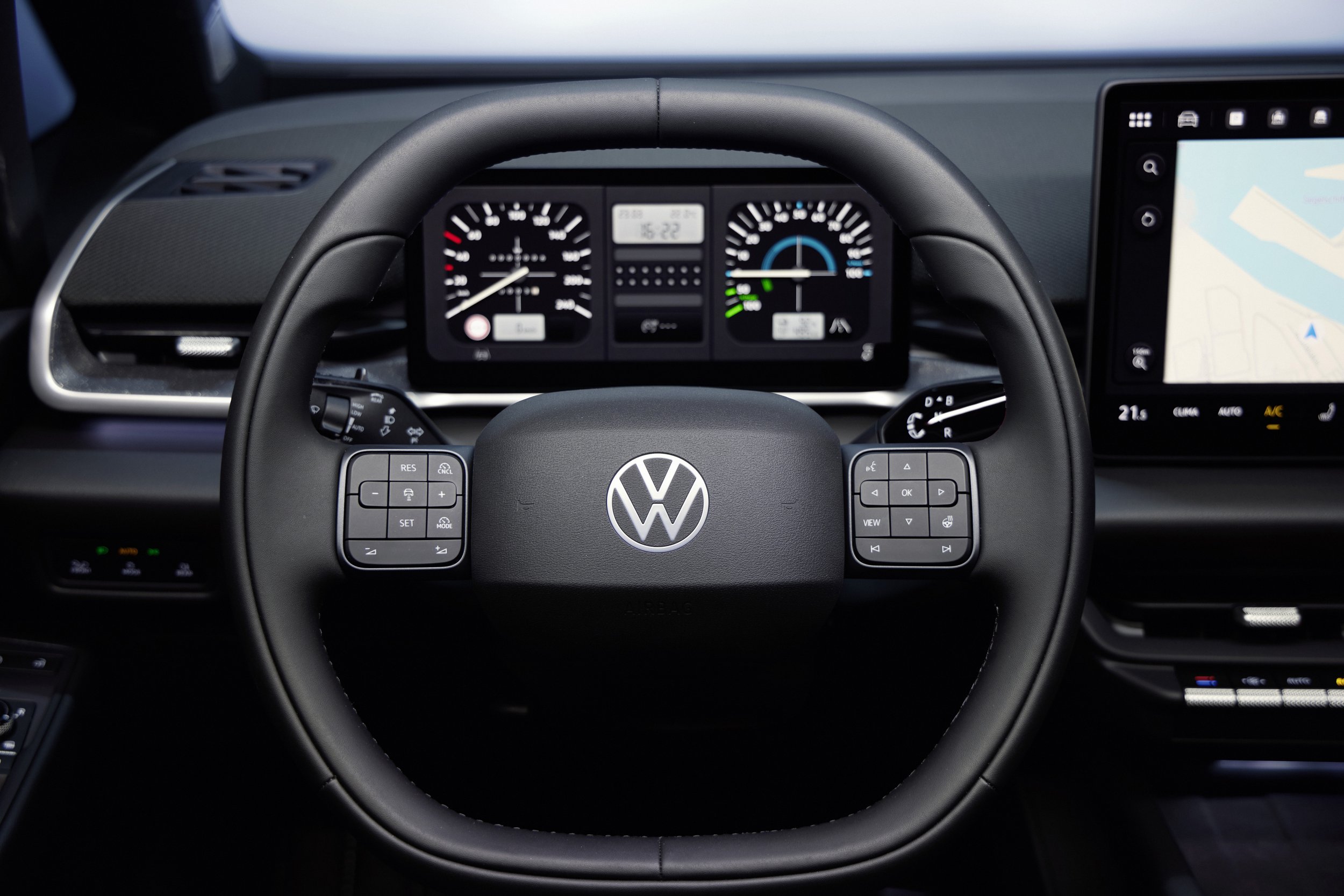
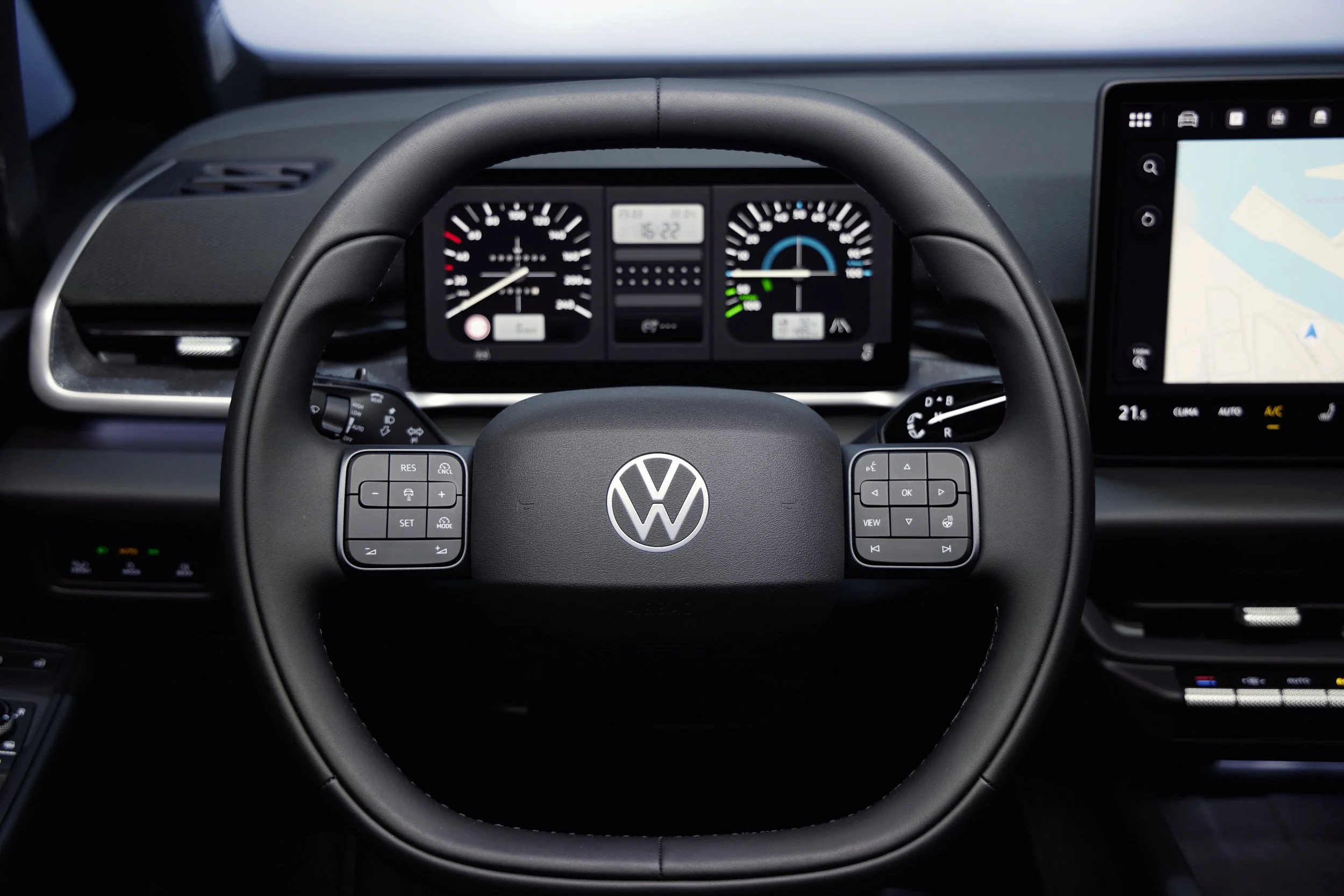
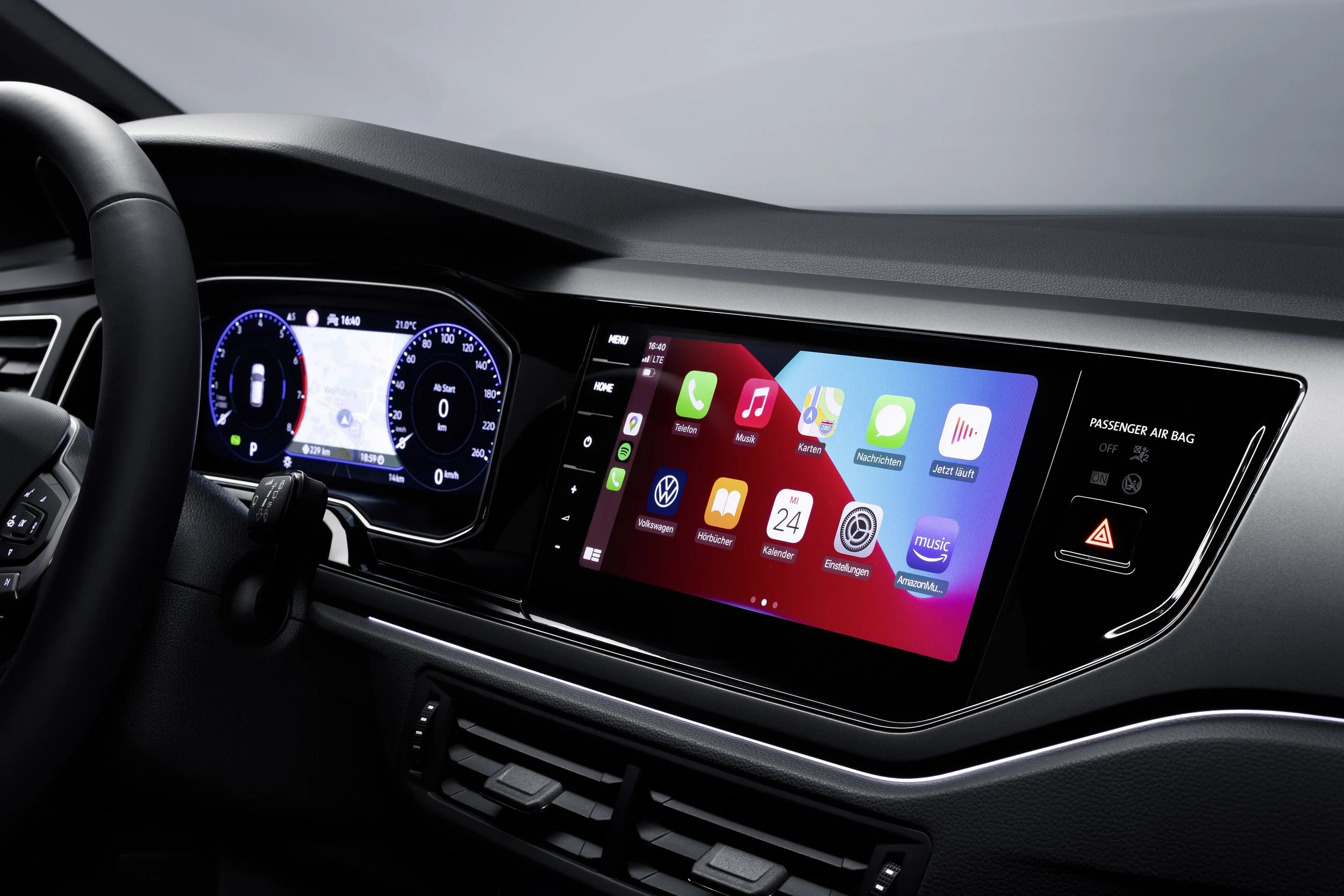
Interior Concept for VW ID.3 Neo
By Martin Rudolf Kaschke, Platform Lead - Digital Aftersales Strategy at Volkswagen Group, and Julian Amelung, Senior Manager at Deloitte, Orhan Lausen-Kartal, Manager for Transformation at Deloitte
Interviewed by Matthew Skelton, co-author of Team Topologies.
“Our experience at Volkswagen Group Aftersales shows that Team Topologies is not merely a theoretical framework; it provides the decisive language and robust thinking framework required to ensure that architecture, team boundaries, and ownership are deliberately co-designed.”
Executive summary: 5 key takeaways for transformation leaders and CIOs
Accelerated delivery via self-service: Shifting from isolated applications to a centralized platform reduced infrastructure provisioning times from days or weeks to largely automated, self-service processes.
Efficiency through shared platform capabilities: Instead of each of the 40+ applications operating its own platform and infrastructure, the organization now leverages shared platform capabilities. This reduced duplicated capabilities and the dependency on application-specific infrastructure specialists.
Accelerating modernization through shared ownership: By bringing legacy mainframe teams and their modernization counterparts into shared ownership spaces, the organization aligned teams behind one target picture and significantly accelerated replacement speed.
Empowering frontline productivity: By creating Stream-aligned teams that provide consumable Domain APIs, the organization enabled seamless workflows for workshop employees and significantly reduced administrative overhead.
Future-proofing the business model: The reorganization established the digital foundation and ecosystem-based operating model required for highly profitable future revenue streams, including Software-Defined Vehicles (SDVs), connected-car services, and AI-driven data monetization.
Overview: Global Aftersales for 20k retailers worldwide
The Aftersales department is a vital area in the Volkswagen Group, driving revenue through Original Parts for repairs and warranty cases, and by increasing customer loyalty to the brands’ service networks. Beginning in 2025, we began a substantial transformation using Team Topologies principles and techniques to guide and shape the initiative, with the aim of reducing time-to-value and opening up space for innovation.
This transformation initiative supports Volkswagen Group Aftersales globally, spanning all brands, markets, dealers, wholesalers, and partners. The immense scale of this landscape encompasses approximately 20000 retailers and more than 80 modern and legacy Aftersales systems.
Up to 250 internal employees were directly involved in driving the core transformation, while the operational impacts reached around an additional 300 internal employees alongside multiple external development and delivery partners. Operating on a global scale required the Aftersales platform to support complex regulatory and operational constraints, including GDPR, cross-border data handling, and specific market compliance mandates across regions like Europe, China, and the USA.
Ambition and Starting Point
In the years prior to the start of the transformation, the automotive industry’s shift toward electrification, connected vehicles, and growing expectations for integrated, AI-driven digital experiences opened up significant new opportunities for Aftersales. As electrification reshapes traditional mechanical service revenues, our digital Aftersales capabilities are becoming more critical than ever.
To fully capture these opportunities, we set out to evolve our technology landscape into a platform that supports next-generation services at scale. Historically, application teams had built highly specialized solutions tailored to their individual needs. This approach served each application well, but it led to a diverse set of technology stacks. For example, 40+ applications each operated their own infrastructure setup, leaving substantial potential for synergies.
Volkswagen leadership recognized that shifting from individual modernization toward a centralized ecosystem and platform strategy was the key to scaling for future API-driven, AI-driven, and SDV-driven business models.
Key Moves that Unlocked Flow
The core of the transformation was not technical execution, but evolving the organizational mindset. For years, teams had successfully optimized for their own applications and owned their distinct tooling and infrastructure. Moving toward shared landscape optimization required us to establish and normalize deep alignment around common standards and governance. At Volkswagen Group, we achieved this through the explicit application of Team Topologies principles.
Move 1: Making workshop workflows seamless
With a historically grown landscape of many systems and interfaces, workshop employees often worked across multiple applications, consolidating data along the way. Our goal was to let them spend more time on vehicles and less on administration.
Our approach: At Volkswagen Group, we restructured responsibilities using four levers: functional domains, audience-specific products, a shared platform, and clearly owned Domain APIs. We carved out clear functional domains like Repair & Maintenance, Complaint & Warranty, and Diagnosis, treating them as independently owned, specialized subsystems. Simultaneously, we established Stream-aligned teams focused purely on distinct audiences, such as Customers, Dealers, 3rd Parties, and OEM-adjacent actors. By abstracting internal complexity behind clearly owned Domain APIs, workshop staff can now rely on integrated data flows instead of manual system integration.
Move 2: Aligning legacy and modernization in one ownership space
In one instance, a team maintaining a mainframe solution and a team building its successor were each optimizing for their own mandate. The legacy team focused on stability and ongoing demands, while the replacement team focused on the future target state. With requirements continuously evolving, feature parity remained a moving target.
Our approach: We recognized this as an organizational boundary question rather than a technical one requiring architectural transitions. We merged the responsibility for both systems into a single ownership space. With a shared target picture, knowledge flowed openly and the replacement process gained rapid momentum.
Move 3: Bringing Business and IT together
Historically, Aftersales followed the classic split between “business” (requirements) and “IT” (delivery).
Our approach: We created virtual product teams that combined IT and business personnel. By bringing prioritization, functional decisions, and technical delivery into one shared ownership space, both sides optimized together rather than in isolation. These virtual teams shared a common product vision and drove outcomes together.

The journey: 2025 through 2027
We mapped out the transformation execution over a multi-year horizon:
2025 – Foundation Phase: We began the journey with a heavy focus on governance from day one. We defined the target architecture, governance model, and platform principles via Architecture Decision Records (ADRs). We established a central platform organization, aligning core capabilities across infrastructure, operations, security, and developer enablement. Crucially, reusable templates and self-service foundations were introduced for application and data products.
2026 – Migration & Enablement: During this phase, we used a migration-factory approach to transition applications and infrastructure into the new platform model. Shared cross-functional services—including CI/CD, observability, security, and API management—were rolled out across the board. We actively modularized legacy systems to begin stripping away redundant functionality. A key tactical move was stripping the User Interfaces (UIs) from 40+ legacy applications, making them purely API-centric and setting the stage for rapid UX evolution.
2027 onwards – Ecosystem Scaling: Looking toward the future, we expect to continually consolidate legacy systems while rapidly expanding shared services. The operational focus will shift heavily toward AI implementation and advanced partner API integration. The ultimate goal is a fully realized organizational shift toward continuous, platform-driven delivery and global ecosystem optimization, guided by Team Topologies.
Metrics and Return on Investment (ROI)
The adoption of Team Topologies techniques drove highly tangible ROI for us across several dimensions:
Delivery Speed and Efficiency: By standardizing tooling and offering reusable platform services, we achieved a noticeable reduction in development and onboarding effort. Infrastructure provisioning times, which previously took days or weeks, were slashed to largely automated, self-service processes.
Cost Efficiency and Lean Delivery: The transformation heavily relied on lean principles to avoid waste and rework. Instead of managing infrastructure details, teams were empowered to focus strictly on value streams, such as data integration. Centralizing core capabilities reduced the dependency on application-specific infrastructure specialists. This shared model lowered operational overhead immediately and created substantial long-term reduction potential for both cloud and legacy operating costs.
Skill Optimization: We were able to optimize the skills required inside each team. Because platform infrastructure is centrally managed, there is drastically less need for infrastructure skills inside Stream-aligned application teams. Furthermore, because the platform intentionally utilizes a mix of internal and external personnel, the organization can easily adjust its skill mix dynamically as demands evolve.
Furthermore, the approach led to significant strategic impact. Through the use of Team Topologies, we:
Established the technological foundation for AI-enabled Aftersales capabilities, API-based business models, connected-vehicle services, and ecosystem partnerships.
Improved scalability and speed of delivery for future global digital services.
This sets up the Aftersales division at Volkswagen Group for sustainable business development via future-ready digital infrastructure and organizational architecture.
The value of Team Topologies in large enterprises
For major global enterprises in automotive and manufacturing, technological modernization often fails because the organizational structure is misaligned with the intended value streams. Our experience at Volkswagen Group Aftersales shows that Team Topologies is not merely a theoretical framework; it provides the decisive language and robust thinking framework required to ensure that architecture, team boundaries, and ownership are deliberately co-designed.
Large-scale manufacturing environments are characterized by historically grown, deeply complex system landscapes. Team Topologies brings distinct value to this sector by acknowledging that a single uniform structure will not work. Instead, it differentiates organizational structures to handle different types of complexity:
Platform Teams absorb the immense infrastructure and tooling complexity inherently found in global enterprises, allowing operational teams to focus on domain-specific user needs.
Complicated-Subsystem Teams safely encapsulate specialized, historically grown logic or deep functional cores (like legacy diagnostic databases) that cannot be sensibly replicated across the enterprise.
Stream-Aligned Teams ensure that internal order is translated into externally effective interfaces. In manufacturing, a cleanly cut internal domain is useless if third-party suppliers, dealer networks, and OEM partners cannot integrate with it. Stream-aligned teams serve these distinct audiences by translating internal heterogeneity into stable, consumable Domain APIs.
Enabling teams span boundaries, detect problems (and solutions), and facilitate rapid upskilling as needed.
Crucially, Team Topologies teaches automotive leaders Conway’s Law in reverse: overlapping capabilities and conflicting incentives between teams will inevitably produce a blocked, duplicated architecture. By framing interaction modes explicitly, large enterprises can align incentives across departments.
Ultimately, the true ROI of Team Topologies for a transformation leader or CIO is strategic agility. Perfect target architectures are rarely permanent. By aligning technology, teams, and responsibilities, large corporations can stop treating modernization as a one-off event. Instead, they embed it as a continuous, friction-free capability, ensuring they are positioned to capture the value of the next generation of connected and software-defined vehicles. We’re proud that Volkswagen Group is leading the way.
Next steps: applying Team Topologies at scale
Request a keynote talk to inspire your teams and kickstart a transformation initiative
Order 50 or more copies Team Topologies Second Edition now in bulk - with free worldwide shipping
Buy an Enterprise Content License with access to a huge library of official Team Topologies workshop and training materials to catalyse large-scale transformation
Get an online consultation on Team Topologies with one of the co-authors of the book
About the authors:

Martin Kaschke, Platform Lead - Digital Aftersales Strategy, Volkswagen Group

Julian Amelung, Senior Manager, Deloitte

Orhan Lausen-Kartal, Manager for Transformation at Deloitte