Team Topologies for the AI age - stewardship of value flow
By Matthew Skelton
Photo by Leiliane Dutra from Pexels: https://www.pexels.com/photo/green-plant-on-brown-rock-11108499/
“In the AI era, stewardship boundaries apply to all knowledge work. Whether your team produces software, compliance documentation, or marketing materials, the principles are identical. We are no longer managing builders, but curators and guardians of semi-automated systems.”
In 2019, when Manuel Pais and I published Team Topologies, organisations were shifting rapidly toward cloud adoption. We set out to answer a burning question: how do we organise teams to keep pace with modern cloud systems? Our answer was to establish clear "ownership boundaries", specifically, defining who builds what. We aligned long-lived teams to a continuous stream of value delivery, helping them reduce cognitive load and build with speed and autonomy.
But that was 2019. Today, in Q3 of 2026, we stand before an even larger transformation. Generative and agentic AI tools are completely rewriting knowledge work. We see a wild rush where organisations measure productivity by "a zillion lines of code" or content generated by a button click.
At Team Topologies, we believe this trajectory is deeply misguided. If people measure AI adoption success by construction volume - how much code we generate or how many documents we churn out - they are setting ourselves up for systemic failure. AI forces us to move past "construction boundaries" and instead establish clear boundaries around the stewardship of value flow and human accountability.
From Construction Boundaries (2019) to Stewardship Boundaries (2029)
In our current Team Topologies book (2019, 2025), our focus was largely on the software delivery lifecycle. We defined boundaries that were essentially construction boundaries. The goal was to establish who has the responsibility to build, run, and evolve a specific digital service, framed as team ownership.
Fingers crossed, Manuel and I plan to release our next major book in the next few years. That book will use a slightly different concept: boundaries for the effective stewardship of value flow.
This is a subtle but important shift. "Stewardship" is different from "ownership" or "construction". It is about taking care of the ongoing health, quality, and direction of a value stream. It means looking at the value delivered to customers - or in regulated environments, to patients or citizens - and asking: Is this flow healthy? Is it sustainable? Are we guiding it in a safe, cost-effective, and compliant direction?
This extends far beyond software engineering. In the AI era, stewardship boundaries apply to all knowledge work. Whether your team produces software, compliance documentation, or marketing materials, the principles are identical. We are no longer managing builders, but curators and guardians of semi-automated systems.
Cognitive Load Meets AI Context Windows: An Elegant Equivalence
One of the foundational concepts of Team Topologies is team cognitive load. We argued that an organisation's delivery speed is fundamentally limited by the working memory of its teams. If a team is overloaded with too many responsibilities, too much domain complexity, or too many handoffs, their ability to deliver value grinds to a halt.
We have discovered a fascinating and highly elegant parallel in the world of AI. Engineering leaders using Team Topologies and AI on a daily basis - including heads of engineering at Silicon Valley financial services firms - have mapped team cognitive load directly to AI context windows.
In human teams, we reduce cognitive load by defining clear boundaries and keeping our focus narrow, using platforms to provide capabilities “as a service” like a vending machine. In agentic AI systems, we must do the exact same thing. Throwing an entire enterprise codebase or a massive, unstructured dataset at an AI agent will cause it to lose focus, hallucinate, or produce unusable results.
Instead, AI systems require clearly defined, long-lived boundaries of responsibility and highly constrained, structured context. Just as humans work best when their cognitive load is managed, AI agents work best when the context injected into their operating window is strictly defined and focused. The two concepts are functionally equivalent, it seems.
To make this work at scale, organisations must adopt platform engineering patterns. The platform acts like a self-service "vending machine," providing automated, self-service access to clean, pre-packaged data, operations, and services. By consuming clean interfaces from the platform, both human teams and AI agents have their cognitive and contextual loads minimised, enabling a safe, rapid flow of value.
Prepare your workforce for AI with the Team Topologies AI Workforce Readiness Accelerator
Accountability, Traceability, and the Regulated Reality
Reframing AI success around stewardship is not just a theoretical preference; in highly regulated sectors like healthcare and finance, it is a matter of survival.
In these environments, insurers, financial auditors, and medical regulators ask very hard, non-negotiable questions when things go wrong: Who made this decision? What was the audit trail? Who is legally liable? If an organisation's answer is "the AI recommended it, and we just clicked approve," that organisation could well lose its operating licence.
Vibes are simply not enough when financial assets, compliance, or human lives are on the line. This is why human accountability must remain at the center of the value stream, using genuine human intelligence to shape, constrain, and take ultimate responsibility for AI-driven outcomes.
Clear stewardship boundaries solve this problem by ensuring that every AI agent and automated workflow is governed by a specific, long-lived team. This team is responsible for three critical areas:
Traceability and Auditability: Establishing an observable trail of decisions, inputs, and outputs so that when an auditor asks for the reasoning behind a specific decision, there is a clear story to tell.
Defensive Design: Managing the AI-native software development lifecycle (SDLC) by focusing on minimising the amount of code produced to meet a given goal. In software delivery, code is a liability, not an asset (even if the accountants tell a different story). Every extra line of code produced by an AI is an extra line that must be tested, maintained, and secured.
Managing the Attack Surface: The more code an organisation puts live, the larger its security attack surface becomes. Threat actors - whether nation-states or dark web syndicates - are constantly looking for vulnerabilities. Flooding production with unverified, AI-generated code exponentially increases security risks. Long-lived teams acting as strict stewards of their value flow ensure that only the smallest, highest-quality, and most secure changes are promoted.
Forcing a Return to First Principles
In many ways, the arrival of AI is acting as a forcing function for the entire industry. For decades, organisations got away with being sloppy or at least uninformed, relying on manual handoffs, massive batch sizes, and a total lack of clear ownership boundaries.
AI is changing all of that. It is shining a harsh light on poor engineering practices. To succeed with AI-assisted delivery, organisations must adopt practices well-proven for fifteen to twenty years, such as Continuous Delivery (CD) and Domain-Driven Design (DDD).
The only approach that works effectively for rapid value flow - with or without AI - is breaking work down into end-to-end tiny slices. Instead of building a massive, unverified block of software/content/data and throwing it over the wall, we must build the smallest possible increment, deploy it safely, verify its quality, and iterate. This continuous, disciplined flow is the core of modern stewardship.
For me, the goal of AI adoption is not to build a factory producing mountains of unmanaged content. It is to empower long-lived human teams to act as responsible, high-fidelity stewards of their value streams. By using Team Topologies to manage human cognitive load, restrict AI context windows, and enforce human accountability, we can unlock the true, safe, and sustainable potential of the AI-native era.
About the authors:
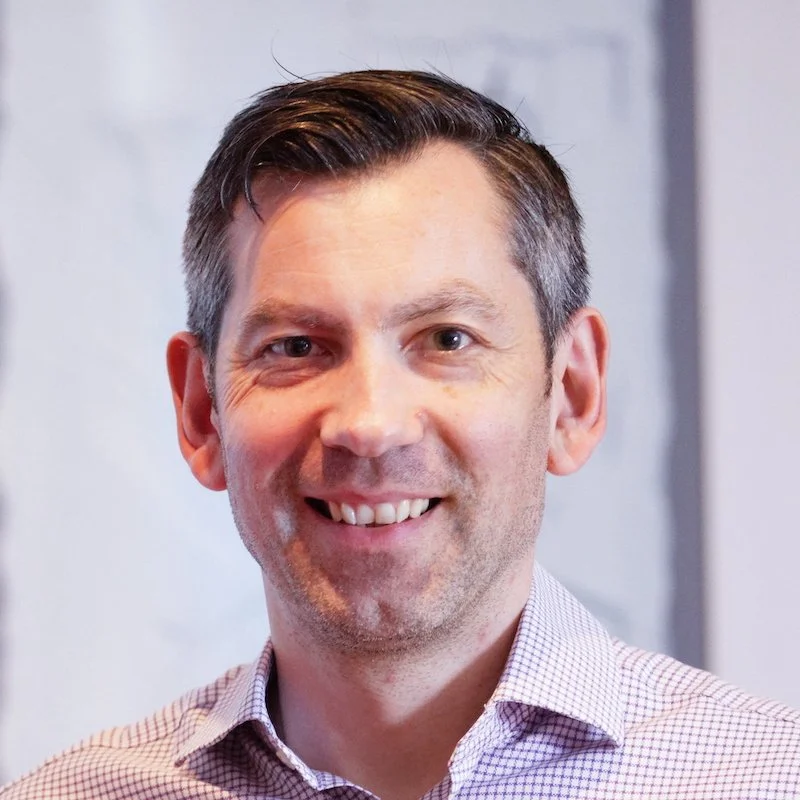
Matthew Skelton, CEO at Conflux, co-author of Team Topologies
I provide leaders with the levers and language to enhance decision-making, reshape operating models, redesign capability placement, and create cultures that enable sustainable high performance without burnout.
As co-author of the award-winning book ‘Team Topologies’ and CEO at Conflux, my ideas and practices have been adopted by organizations worldwide to transform how they deliver value. Recognized by Book Authority as one of the “Best Product Management Books of All Time,” Team Topologies has become a reference point for leaders looking to scale with clarity, reduce friction and improve value flow.
Drawing on Team Topologies, Adapt Together™ and related approaches, I work with executives and teams to integrate organizational design, platform thinking and humane leadership, demonstrating that business performance and human wellbeing are not mutually exclusive but mutually reinforcing.
Read more on Team Topologies