
Why Team Topologies is the Essential Foundation for AI ROI

Photo by Jaymantri from Pexels: https://www.pexels.com/photo/garden-way-2631/

“AI delivers value ONLY when the organization has the stewardship boundaries, practices, and governance to enable rapid value flow. The rest is theater.”

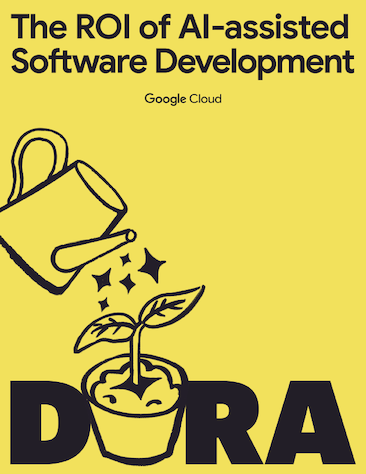
I recently took a close look at the 2026 DORA report on the return on investment (ROI) from AI-assisted software development. The DevOps Research and Assessment (DORA) group has spent over a decade producing highly influential research on software delivery, and their latest findings confirm a reality we have long championed. The central thesis of the 2026 report is incredibly clear: artificial intelligence serves as a powerful amplifier. It will magnify the strengths of high-performing organizations, but it will equally magnify the dysfunctions of struggling ones.
The harsh truth is that simply purchasing AI licenses or tokens will not guarantee a financial return. In fact, if your engineering teams are already bogged down by heavy bureaucracy or manual testing, injecting AI into that system will simply accelerate the accumulation of technical debt and downstream chaos. According to the DORA report, the greatest returns on AI investment come not from the tools themselves, but from a strategic focus on the underlying organizational system.
What exactly is this organizational system? DORA defines it as the quality of the internal platform, the clarity of workflows, and the alignment of teams. It is no coincidence that these are the exact principles we helped popularize in the Team Topologies book, because the Team Topologies ideas were inspired and influenced by previous DORA research going back to 2013. Team Topologies provides the vital architectural foundation required to survive the transition to AI by treating the organization as a holistic system.
Clarity of Mission and Purpose
One of the core recommendations in the 2026 DORA report is to anchor AI velocity in user value. Traditional, siloed organizations often struggle to define what value actually looks like, leading AI agents to generate code or content that lacks business context. Adopting Team Topologies forces a critical conversation about value: for whom are we doing this work, and what is their need?
By organizing empowered groups of people into teams structurally aligned to continuous flows of value—and eliminating handoffs between teams—we achieve a strong clarity of mission and purpose. This structural clarity is absolutely essential for Agentic AI. When a team has an ongoing, end-to-end responsibility for a flow of value, it provides clear objectives and anchoring points for autonomous AI agents to understand what to build and how to build it.
Managing the Verification Tax with Automated Guardrails
Because AI acts as an amplifier, it dramatically increases the volume and velocity of generated code and output. However, this introduces a massive "verification tax"—the heavy cognitive load and time developers must spend reviewing AI-generated work for trustworthiness, security, and architectural standards. If an organization relies on manual verification, this overwhelming volume of output will create immediate bottlenecks.

Photo by Lucila Morilla from Pexels: https://www.pexels.com/photo/directional-arrows-signs-on-the-roadside-13556967/
To navigate what DORA calls the "J-Curve"—a temporary dip in productivity associated with AI adoption—organizations must deploy automated verification and guardrails. Team Topologies provides the precise organizational patterns to solve this. Instead of keeping specialized experts in manual validation flows, we can redeploy them into enabling teams or platform teams. These specialists can focus on building "complicated subsystems" that provide automated testing and validation as a service. This moves human expertise out of the manual bottleneck and realigns it to support rapid, sustainable value delivery.
Treating Platforms and Data as Products
DORA’s research confirms that a high-quality internal developer platform (IDP) acts as the "primary connective tissue for AI value". The report strongly advises treating internal platforms as products designed to reduce friction and provide self-service workflows. This aligns perfectly with the core Team Topologies mandate: platforms exist to accelerate value flow by actively reducing the cognitive load on human teams.
Furthermore, AI agents need high-quality context to function. DORA recommends cultivating AI-accessible data ecosystems with clean, domain-aligned APIs. By treating data as a curated product—managed by the team stewarding that specific service—we ensure information is highly digestible for both human engineers and AI agents.
Stewards of Value Flow
Ironically, the overwhelming velocity of AI is forcing bureaucratic, top-down enterprises toward more humane, empowered organizational structures. Investing in human capital in the AI era is no longer just about training staff on how to write better prompts; it is about empowering individuals to be effective stewards of value flow.
While the software engineering industry is leading the way in measuring these impacts, the practices encoded in Team Topologies are fundamental to how information flows and how business intent is realized. They apply to almost any form of knowledge work across the enterprise.
Without the boundaries, practices, and governance provided by Team Topologies, localized AI productivity gains will simply vanish into downstream bottlenecks. But by actively shaping the organizational system for rapid value flow and reduced cognitive load, Team Topologies sets the vital foundation for unlocking exponential, sustainable ROI from AI.
Watch this talk at the DORA community
In this talk, Matthew Skelton - founder at Conflux and co-author of the book Team Topologies - explores techniques and metrics to help you untangle your software delivery, together with real-world examples of organizations successfully applying Team Topologies and related approaches to decouple teams and improve flow.
Note: the talk is pre-AI but explores core concepts that are completely relevant to success with AI, especially around decoupling and clarity of mission.
